Table of contents:
- Proper aftercare for permanent makeup
- Healing stages after permanent makeup
- Days 1–2
- Days 3–5
- Days 6–10
- Weeks 2–4 - Daily care during healing
- Mistakes to avoid while healing
- How to make permanent makeup last longer
Permanent makeup - a procedure that eliminates the need for daily makeup and gives you perfect brows, eyeliner, or lips for many months. Yet behind the apparent simplicity lies the artist’s meticulous work and… your responsibility. Aftercare partly determines how even the color will be, how quickly the skin heals, and whether the expected result will last.
Proper aftercare for permanent makeup
Right after the procedure, the skin perceives the pigment as a foreign element. In response to micro-injuries, a natural healing reaction kicks in, which can cause:
- mild redness;
- swelling;
- a feeling of tightness.
All of this is within the norm, but it’s important not to interfere with the body or make the process worse.
The main goal of aftercare is to keep things sterile, protect the area from drying out, and ensure proper healing without color loss. During the first 24 hours it’s crucial not to touch the area where the permanent makeup was done.
Be sure to follow the artist’s recommendations given after the procedure. If you don’t, the pigment may come out unevenly, light spots, micro-scars, or irritation may appear. This is especially true for the lips and eyelids, where the skin is thin and sensitive. Even the slightest violation of the rules can negate work performed with maximum precision.
Healing stages after permanent makeup
Healing after permanent makeup happens in stages, and it’s important to understand that each period has its own specifics.
Days 1–2
Immediately after the procedure the result looks brighter than it will after healing: the pigment seems too saturated, the shade darker. This is normal because due to micro-damage the skin swells and the pigment “sits” too close to the surface.
These days you need to treat the area with extra care: don’t touch it, don’t wet it, and don’t apply anything except the recommended products. If your artist prescribed a healing cream or an antiseptic, use it strictly as directed.
Days 3–5
Thin scabs begin to form. This is a natural regeneration process: the skin sheds the damaged top layer, and a new one forms underneath. Do not pick the scabs off, even if they seem dry or bothersome.
Any interference can displace pigment particles and leave a “gap” in color. At this stage you may feel mild itching — a sign of healing — and it’s best just to ride it out.
Days 6–10
The scabs gradually fall off on their own, and the color underneath may look too light. Many clients get worried — “it’s all gone.” In reality, the pigment is temporarily muted because a thin layer of new epidermal tissue has formed over it. In a few days the shade will start to show, becoming more delicate and natural.
Weeks 2–4
The skin fully recovers and the pigment “opens up.” This is when you can assess the final result: shape, shade, and color evenness. If some areas look uneven — it’s not an artist’s mistake, but the skin’s natural behavior. A touch-up is usually done after a month to even out the tone and lock in the result.
Daily care during healing
The first few days after permanent makeup are when your actions determine how even and long-lasting the result will be. It’s important to balance hygiene, hydration, and protection from external factors.
Below are basic guidelines you can rely on, but your artist will always give individual instructions based on your skin type and the treated area:
- Hygiene and antiseptics. The treated area is an open micro-injury, so the main task in the first days is antiseptic care. Use alcohol-free antiseptics such as Chlorhexidine 0.05% or Miramistin. Apply with a cotton pad or cotton swab, gently dabbing the skin without rubbing. Do not use hydrogen peroxide, alcohol-based lotions, or micellar water.
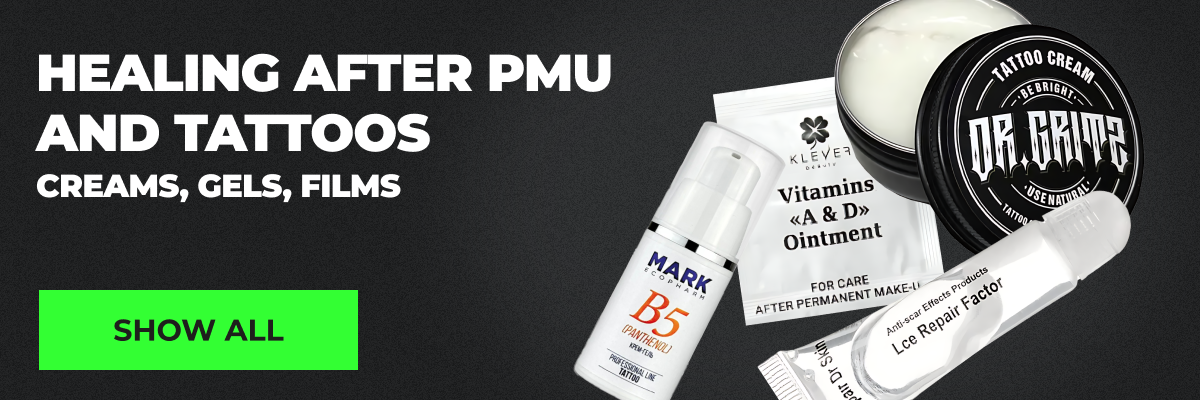
- Moisturizing and healing. After antiseptics, restore the protective barrier. Use special ointments and creams that promote healing, such as Bepanthen, Panthenol, Aquaphor, Solcoseryl. They create a light film that locks in moisture and helps the skin regenerate without cracks or tightness. Apply a thin layer 2–3 times a day with clean hands or a disposable spatula.
- Protection from external factors. While the skin is healing, avoid contact with water, dust, and cosmetics. During the first week do not wash with hot water or visit saunas, pools, or workouts. Sweat, steam, and moisture foster bacteria and wash out pigment.
- After healing. Once the scabs have fallen off, protect the area from the sun — ultraviolet light breaks down pigment, making it dull and yellowish. Use SPF 30–50 when going outside, even in winter.
Mistakes to avoid while healing after permanent makeup
Even flawless work can be ruined by a single aftercare mistake. The most common issues professionals see:
- Picking scabs. Absolutely off-limits. The scab holds pigment in the skin, and removing it too early leaves empty spots and scars. The color becomes patchy and you’ll need a correction in those areas.
- Using rich creams and oils. For the first 10–14 days, any products with petrolatum, shea butter, or coconut oil are contraindicated — they soften the skin and disrupt natural healing.
- Sauna, steam room, tanning beds, workouts. Increased body temperature and sweating speed up pigment loss. All of this is off the table for at least 10–14 days.
- Sun and freezing temperatures. Direct sunlight bleaches pigment, while frost over-dries delicate skin. If you must go outside, protect your face with a scarf, sunglasses, and sunscreen.
- Cosmetics and makeup products. No foundation, micellar water, or scrubs during this period. They can trigger inflammation or cause the color to fade.
- Skipping your aftercare routine. Irregular use of antiseptics and cream can lead to dryness, cracking, and uneven healing.
How to make permanent makeup last longer
First, remember that pigment isn’t permanent and will gradually fade over time. To keep it vibrant longer, follow a few simple tips.
Start by protecting your skin from the sun regularly. Using SPF products is essential. Ultraviolet light is the main enemy of permanent makeup, especially on the lips and brows.
Second, hydration is key to longevity. Dry skin renews faster, meaning the pigment washes out more quickly. Use light moisturizers regularly, avoiding acids and retinol on the permanent area.
Third, schedule a touch-up every 12–18 months. Even with the best care, pigment slowly dulls, and a light refresh restores saturation.
Finally, be gentle day to day: avoid aggressive peels, laser treatments, and scrubs on the area. The more delicately you care for your skin, the longer it will look well-groomed.